Guide
Occupational medicine and health and safety for employers
Articles on duties, deadlines and procedures under German law, plus notes on amended regulations, each backed by the official sources. Every article names its legal basis and the legal status it reflects.
 Food-hygiene instruction (IfSG)
Food-hygiene instruction under Section 43 of the Infection Protection Act
Employees who carry out activities covered by Section 42 of the Infection Protection Act (IfSG) need a food-hygiene instruction (Belehrung) under § 43 IfSG. What matters: the date of the certificate, agreeing the format and process with the responsible public health office (Gesundheitsamt), and the employer documenting the refresher instruction.
Read more →
Food-hygiene instruction (IfSG)
Food-hygiene instruction under Section 43 of the Infection Protection Act
Employees who carry out activities covered by Section 42 of the Infection Protection Act (IfSG) need a food-hygiene instruction (Belehrung) under § 43 IfSG. What matters: the date of the certificate, agreeing the format and process with the responsible public health office (Gesundheitsamt), and the employer documenting the refresher instruction.
Read more →
 Update Occupational health care
Occupational physician duty from the first employee
The duty to have an occupational physician starts with the first employee. Employers must organise occupational health care and occupational safety support. Form and scope of care depend on the Occupational Safety Act (ASiG) and on DGUV Regulation 2 (DGUV Vorschrift 2) as issued by the responsible accident insurance institution.
Read more →
Update Occupational health care
Occupational physician duty from the first employee
The duty to have an occupational physician starts with the first employee. Employers must organise occupational health care and occupational safety support. Form and scope of care depend on the Occupational Safety Act (ASiG) and on DGUV Regulation 2 (DGUV Vorschrift 2) as issued by the responsible accident insurance institution.
Read more →
 Update Occupational health check-ups
Mandatory, offered and on-request check-ups under the ArbMedVV
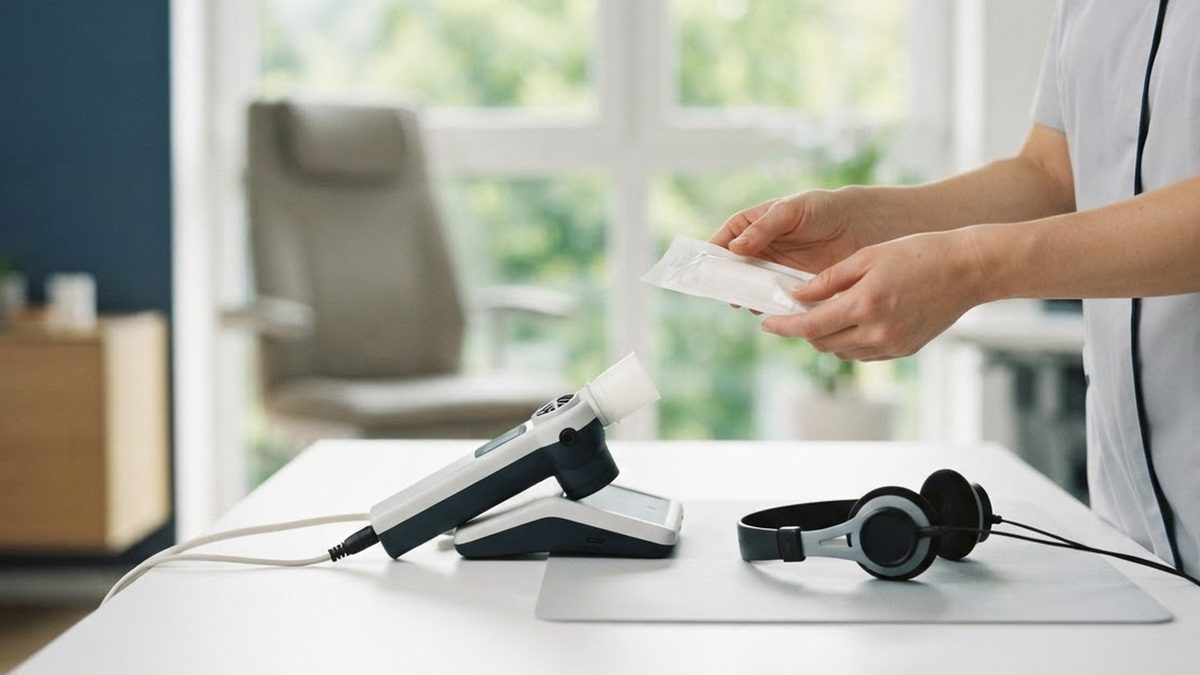
The Ordinance on Occupational Health Care (ArbMedVV) distinguishes between mandatory check-ups (Pflichtvorsorge), offered check-ups (Angebotsvorsorge) and check-ups on request (Wunschvorsorge). A mandatory check-up is a condition for doing the work. The employer must offer an offered check-up and must make a check-up on request possible when asked. This article sets out deadlines, certificate and check-up register (Vorsorgekartei). It also separates check-ups from fitness-for-duty assessments and from telemedical appointments.
Read more →
Update Occupational health check-ups
Mandatory, offered and on-request check-ups under the ArbMedVV
The Ordinance on Occupational Health Care (ArbMedVV) distinguishes between mandatory check-ups (Pflichtvorsorge), offered check-ups (Angebotsvorsorge) and check-ups on request (Wunschvorsorge). A mandatory check-up is a condition for doing the work. The employer must offer an offered check-up and must make a check-up on request possible when asked. This article sets out deadlines, certificate and check-up register (Vorsorgekartei). It also separates check-ups from fitness-for-duty assessments and from telemedical appointments.
Read more →
 Fitness-for-duty assessment
 for driving, control and monitoring activities (E FSÜ, formerly G 25)
Medical fitness-for-duty assessments are only permissible on a sound, proportionate and activity-related basis. They follow different rules from occupational health check-ups, even when both are done by the occupational physician.
Read more →
Fitness-for-duty assessment
Fitness-for-duty assessment for driving, control and monitoring activities (E FSÜ, formerly G 25)
Medical fitness-for-duty assessments are only permissible on a sound, proportionate and activity-related basis. They follow different rules from occupational health check-ups, even when both are done by the occupational physician.
Read more →
 Psychosocial stress
Psychosocial risk assessment under Section 5 of the Occupational Safety and Health Act
Under Section 5 (3) no. 6 of the Occupational Safety and Health Act (ArbSchG), psychosocial stress is part of the risk assessment in every company with employees. Working conditions are assessed, not people. The choice of method, the measures and the check of their effectiveness must be traceable.
Read more →
Psychosocial stress
Psychosocial risk assessment under Section 5 of the Occupational Safety and Health Act
Under Section 5 (3) no. 6 of the Occupational Safety and Health Act (ArbSchG), psychosocial stress is part of the risk assessment in every company with employees. Working conditions are assessed, not people. The choice of method, the measures and the check of their effectiveness must be traceable.
Read more →
 Workplace reintegration
 management (BEM) under § 167 of Social Code Book IX (SGB IX)
Workplace reintegration management (betriebliches Eingliederungsmanagement, BEM) must be offered when an employee has been unfit for work for more than six weeks within a year. Taking part is voluntary. The procedure and the handling of health data need clear responsibilities.
Read more →
Workplace reintegration
Workplace reintegration management (BEM) under § 167 of Social Code Book IX (SGB IX)
Workplace reintegration management (betriebliches Eingliederungsmanagement, BEM) must be offered when an employee has been unfit for work for more than six weeks within a year. Taking part is voluntary. The procedure and the handling of health data need clear responsibilities.
Read more →
 Update Law and deadlines
Revision of DGUV Regulation 2
The revised DGUV Regulation 2 (DGUV Vorschrift 2) extends standard care (Regelbetreuung) under Annex 1 from ten to 20 employees. Up to one third of services may be delivered digitally if the company is already known. Regular reports are required. Which provisions apply depends on the version issued by the responsible accident insurance institution.
Read more →
Update Law and deadlines
Revision of DGUV Regulation 2
The revised DGUV Regulation 2 (DGUV Vorschrift 2) extends standard care (Regelbetreuung) under Annex 1 from ten to 20 employees. Up to one third of services may be delivered digitally if the company is already known. Regular reports are required. Which provisions apply depends on the version issued by the responsible accident insurance institution.
Read more →
 Update Occupational health care
Care Models under DGUV Regulation 2 for Small Companies
Under DGUV Regulation 2 (DGUV Vorschrift 2), companies with up to 20 countable employees receive standard care (Regelbetreuung) under Annex 1. Alternative care models under Annex 3 and 4 may apply if the business owner works actively in the company and completes training. This article compares Annexes 1 to 4 of the model text and shows what information is needed to assign a company.
Read more →
Update Occupational health care
Care Models under DGUV Regulation 2 for Small Companies
Under DGUV Regulation 2 (DGUV Vorschrift 2), companies with up to 20 countable employees receive standard care (Regelbetreuung) under Annex 1. Alternative care models under Annex 3 and 4 may apply if the business owner works actively in the company and completes training. This article compares Annexes 1 to 4 of the model text and shows what information is needed to assign a company.
Read more →
 Update Occupational health check-ups
Deriving Check-up Triggers from the Risk Assessment
Check-up triggers do not come from job titles. They come from the activities carried out and from the Annex of the Ordinance on Occupational Health Care (ArbMedVV). They decide which occupational health check-ups a company must arrange or offer. This article describes the route from the risk assessment (Gefährdungsbeurteilung) to the check-up plan.
Read more →
Update Occupational health check-ups
Deriving Check-up Triggers from the Risk Assessment
Check-up triggers do not come from job titles. They come from the activities carried out and from the Annex of the Ordinance on Occupational Health Care (ArbMedVV). They decide which occupational health check-ups a company must arrange or offer. This article describes the route from the risk assessment (Gefährdungsbeurteilung) to the check-up plan.
Read more →
 Occupational health check-ups
Wet Work and Skin Strain in Kitchens, Care and Trades
Wet work of regularly more than two hours per day is a trigger for an offered check-up (Angebotsvorsorge). From regularly four hours per day, it is a trigger for a mandatory check-up (Pflichtvorsorge). This article explains the term, the thresholds in the Annex of the Ordinance on Occupational Health Care (ArbMedVV) and the protective measures that come before the check-up.
Read more →
Occupational health check-ups
Wet Work and Skin Strain in Kitchens, Care and Trades
Wet work of regularly more than two hours per day is a trigger for an offered check-up (Angebotsvorsorge). From regularly four hours per day, it is a trigger for a mandatory check-up (Pflichtvorsorge). This article explains the term, the thresholds in the Annex of the Ordinance on Occupational Health Care (ArbMedVV) and the protective measures that come before the check-up.
Read more →
 Occupational health check-ups
Screen Work and Occupational Health Check-ups on Offer
For work at display screen equipment, the employer must make an offered check-up (Angebotsvorsorge) available. It includes an examination of the eyes and vision. This article explains the check-up, special vision aids and ergonomic measures, and how they relate to each other.
Read more →
Occupational health check-ups
Screen Work and Occupational Health Check-ups on Offer
For work at display screen equipment, the employer must make an offered check-up (Angebotsvorsorge) available. It includes an examination of the eyes and vision. This article explains the check-up, special vision aids and ergonomic measures, and how they relate to each other.
Read more →
 Occupational health check-ups
Natural UV Radiation and Heat when Working Outdoors
For intense exposure to natural UV radiation of regularly one hour or more per day, an offered check-up (Angebotsvorsorge) must be offered. For extreme heat exposure, a mandatory check-up (Pflichtvorsorge) must be arranged. UV radiation and heat are separate hazards, each with its own check-up triggers and measures.
Read more →
Occupational health check-ups
Natural UV Radiation and Heat when Working Outdoors
For intense exposure to natural UV radiation of regularly one hour or more per day, an offered check-up (Angebotsvorsorge) must be offered. For extreme heat exposure, a mandatory check-up (Pflichtvorsorge) must be arranged. UV radiation and heat are separate hazards, each with its own check-up triggers and measures.
Read more →
 Occupational health check-ups
Noise in production and trades: action values and check-ups
For noise, the daily noise exposure level and the peak sound pressure level decide whether an offered check-up (Angebotsvorsorge) or a mandatory check-up (Pflichtvorsorge) is required. This article sets out the action values and the measures that come before a check-up.
Read more →
Occupational health check-ups
Noise in production and trades: action values and check-ups
For noise, the daily noise exposure level and the peak sound pressure level decide whether an offered check-up (Angebotsvorsorge) or a mandatory check-up (Pflichtvorsorge) is required. This article sets out the action values and the measures that come before a check-up.
Read more →
 Occupational health check-ups
Respiratory protection: check-ups under the ArbMedVV and a separate fitness-for-duty assessment
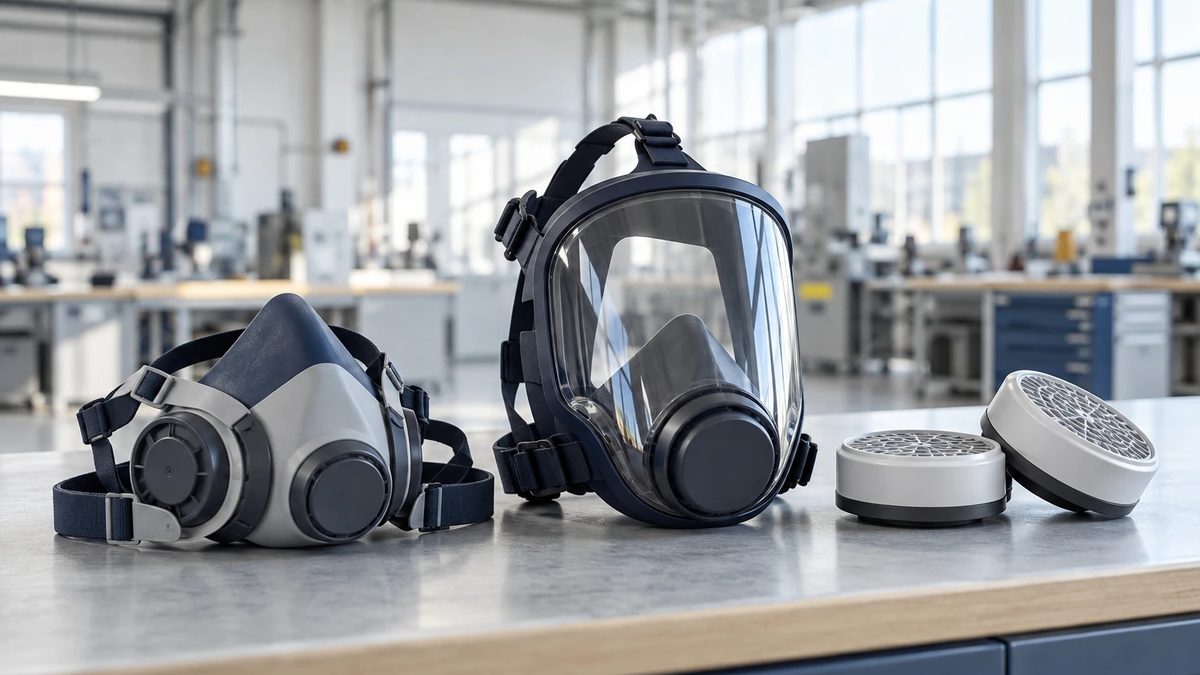
When respiratory protective equipment is worn, the device group decides whether a mandatory or an offered check-up applies. A fitness-for-duty assessment under the DGUV recommendation E ASG (formerly G 26) must be kept separate and is permissible only on its own basis.
Read more →
Occupational health check-ups
Respiratory protection: check-ups under the ArbMedVV and a separate fitness-for-duty assessment
When respiratory protective equipment is worn, the device group decides whether a mandatory or an offered check-up applies. A fitness-for-duty assessment under the DGUV recommendation E ASG (formerly G 26) must be kept separate and is permissible only on its own basis.
Read more →
 Fitness-for-duty assessment
Industrial trucks (forklifts) and cranes: selection, competence and medical fitness
Anyone who operates forklifts or cranes must be suitable and competent. This article separates the company’s selection and safety instruction from the question of when a medical fitness-for-duty assessment is permissible and necessary.
Read more →
Fitness-for-duty assessment
Industrial trucks (forklifts) and cranes: selection, competence and medical fitness
Anyone who operates forklifts or cranes must be suitable and competent. This article separates the company’s selection and safety instruction from the question of when a medical fitness-for-duty assessment is permissible and necessary.
Read more →
 Fitness-for-duty assessment
Work with a risk of falling from height: protective measures and health fitness
Where there is a risk of falling from height, for example in roofing, scaffolding and assembly at height, technical protective measures come first. A medical fitness-for-duty assessment under the DGUV recommendation E ABS (formerly G 41) is added only where there is a justified reason.
Read more →
Fitness-for-duty assessment
Work with a risk of falling from height: protective measures and health fitness
Where there is a risk of falling from height, for example in roofing, scaffolding and assembly at height, technical protective measures come first. A medical fitness-for-duty assessment under the DGUV recommendation E ABS (formerly G 41) is added only where there is a justified reason.
Read more →
 Workplace reintegration
Data protection and documentation in workplace reintegration management (BEM)
Data protection in BEM means that health data are processed only to the extent necessary and on a legal basis. This article describes which information is necessary, on what basis it may be processed and how the records are kept separately from the personnel file (Personalakte).
Read more →
Workplace reintegration
Data protection and documentation in workplace reintegration management (BEM)
Data protection in BEM means that health data are processed only to the extent necessary and on a legal basis. This article describes which information is necessary, on what basis it may be processed and how the records are kept separately from the personnel file (Personalakte).
Read more →
 Workplace reintegration
BEM and gradual return to work: differences and interaction
Workplace reintegration management (BEM) and gradual return to work (stufenweise Wiedereingliederung) are two different procedures. This article explains the legal bases, participants and the step-by-step plan, and shows how the two procedures work together.
Read more →
Workplace reintegration
BEM and gradual return to work: differences and interaction
Workplace reintegration management (BEM) and gradual return to work (stufenweise Wiedereingliederung) are two different procedures. This article explains the legal bases, participants and the step-by-step plan, and shows how the two procedures work together.
Read more →
 Occupational health check-ups
Biological agents in care and healthcare
In care homes, practices and clinics, contact with patients and biological material exposes employees to biological agents. This article covers the risk assessment, protection levels, reasons for check-ups and vaccination advice.
Read more →
Occupational health check-ups
Biological agents in care and healthcare
In care homes, practices and clinics, contact with patients and biological material exposes employees to biological agents. This article covers the risk assessment, protection levels, reasons for check-ups and vaccination advice.
Read more →
 Psychosocial stress
 in shift work and staff shortages
Shift systems and tight staffing cause psychosocial stress in care, logistics and production. This article shows how to record this stress in the risk assessment and address it with organisational measures.
Read more →
Psychosocial stress
Psychosocial stress in shift work and staff shortages
Shift systems and tight staffing cause psychosocial stress in care, logistics and production. This article shows how to record this stress in the risk assessment and address it with organisational measures.
Read more →
 Occupational health check-ups
Post-exposure occupational health check-ups for carcinogenic substances
Post-exposure check-ups (nachgehende Vorsorge) take account of the fact that carcinogenic hazardous substances may cause disease only decades after exposure. This article explains when a post-exposure check-up must be offered, how it is organised after employment ends and what role the accident insurance institutions play.
Read more →
Occupational health check-ups
Post-exposure occupational health check-ups for carcinogenic substances
Post-exposure check-ups (nachgehende Vorsorge) take account of the fact that carcinogenic hazardous substances may cause disease only decades after exposure. This article explains when a post-exposure check-up must be offered, how it is organised after employment ends and what role the accident insurance institutions play.
Read more →
 Law and deadlines
Occupational safety committee (ASA) under § 11 of the Occupational Safety Act (ASiG)
Companies with more than 20 employees must set up an occupational safety committee. This article describes how employees are counted, the committee's composition and tasks, the contribution of the occupational physician and how to organise meetings.
Read more →
Law and deadlines
Occupational safety committee (ASA) under § 11 of the Occupational Safety Act (ASiG)
Companies with more than 20 employees must set up an occupational safety committee. This article describes how employees are counted, the committee's composition and tasks, the contribution of the occupational physician and how to organise meetings.
Read more →
 Update Occupational health care
Digital occupational health care and telemedicine check-ups
Digital occupational health care is possible, but not for every service. This article separates the digital parts of care under DGUV Regulation 2 (DGUV Vorschrift 2) from telemedicine check-ups under AMR 3.4 (occupational medicine rule) and states the in-person requirements.
Read more →
Update Occupational health care
Digital occupational health care and telemedicine check-ups
Digital occupational health care is possible, but not for every service. This article separates the digital parts of care under DGUV Regulation 2 (DGUV Vorschrift 2) from telemedicine check-ups under AMR 3.4 (occupational medicine rule) and states the in-person requirements.
Read more →
 Occupational health care
Occupational health and safety when setting up a company
Occupational health and safety begins with the first hire: from then on, duties apply under the Occupational Safety and Health Act (ArbSchG) and the Occupational Safety Act (ASiG). This article lists the steps in order, from the risk assessment to check-ups, without a blanket pre-employment examination.
Read more →
Occupational health care
Occupational health and safety when setting up a company
Occupational health and safety begins with the first hire: from then on, duties apply under the Occupational Safety and Health Act (ArbSchG) and the Occupational Safety Act (ASiG). This article lists the steps in order, from the risk assessment to check-ups, without a blanket pre-employment examination.
Read more →
 Update Law and deadlines
Keeping an exposure register for carcinogenic substances
Employers whose staff carry out activities with carcinogenic, germ cell mutagenic or reprotoxic hazardous substances of category 1A or 1B must keep an exposure register (Expositionsverzeichnis) if the risk assessment shows a risk to health. This article explains who is covered, what the register contains, how long it must be kept and how the Central Exposure Database of the German Social Accident Insurance can be used.
Read more →
Update Law and deadlines
Keeping an exposure register for carcinogenic substances
Employers whose staff carry out activities with carcinogenic, germ cell mutagenic or reprotoxic hazardous substances of category 1A or 1B must keep an exposure register (Expositionsverzeichnis) if the risk assessment shows a risk to health. This article explains who is covered, what the register contains, how long it must be kept and how the Central Exposure Database of the German Social Accident Insurance can be used.
Read more →
New articles and notes on amended regulations are available as an RSS feed.